Toyota & Lexus "Key Not Detected" Push-Start Fix in Arlington
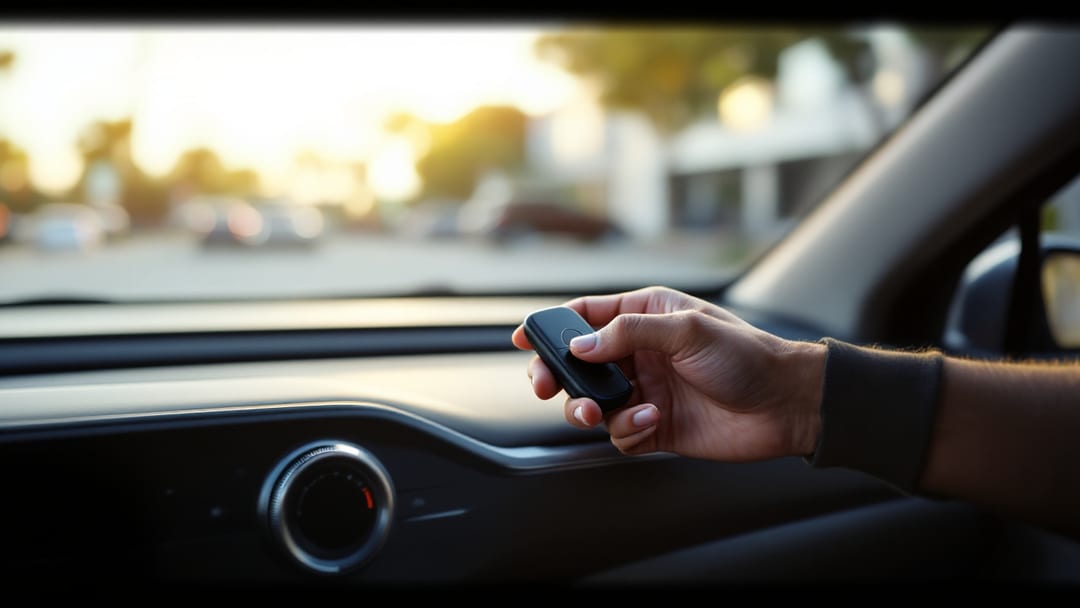
What does "key not detected" mean on a Toyota or Lexus?
As of August 2026, a "key not detected" message on a push-start Toyota or Lexus in Arlington is a failed handshake between the fob and the car, and diagnosis typically runs about $80 to $160 — usually credited toward the repair. Only one of the five common causes is actually a dead key. Arlington Locksmith diagnoses it at the vehicle: call or text (817) 646-7207.
Before you call anyone, there are two things worth trying in the next ninety seconds, standing next to the car. Both are free and one of them solves this more often than any paid repair.
Try these first
1. Hold the fob against the start button
Almost every push-start Toyota and Lexus has a backup reader — a coil behind or immediately near the start control that can read the fob's transponder at very close range with no fob battery at all.
Press the brake pedal. Hold the fob flat against the start button. Press the button with the fob itself.
If the car starts, your fob battery is dead. That is the whole diagnosis. A coin cell costs a few dollars and takes a couple of minutes.
This one trick resolves a genuinely large share of the calls we receive, and it is not written anywhere the average driver ever looks. It is in the owner's manual, in a section nobody reads until the day it matters.
2. Try the other key
If the second fob works normally, the car is fine and the first fob is the problem. The vehicle is clearly detecting and authenticating keys successfully — it just cannot hear that particular one.
That narrows everything. You do not have a car problem, a module problem, or an immobilizer problem. You have a fob problem, and fob problems are the cheapest kind.
"Ninety seconds of testing at the car changes the conversation entirely. Half the time the customer fixes it themselves while still on the phone with us." — Arlington Locksmith service desk
The five real causes
1. Fob battery (most common)
Coin cells fade rather than die. Range shrinks over weeks — you find yourself standing closer to unlock, then pressing twice — and then one morning detection fails entirely. If you noticed shrinking range beforehand, this is almost certainly it.
2. Car battery, not fob battery
This one surprises people. The modules that scan for your key run from the vehicle's 12-volt battery. When it sags, those modules behave erratically even though the dashboard still lights up convincingly.
It is especially common on hybrids and on any car that has sat for two or three weeks — an airport lot, a holiday, a second vehicle that only moves at weekends. The Prius all-keys-lost guide covers why hybrid 12-volt behaviour catches owners out, and the same logic applies across the whole push-start Toyota range.
3. Radio interference
Smart key detection uses low-power radio, and it can be swamped. Common culprits: parking structures with heavy electrical infrastructure, areas near broadcast equipment, aftermarket wireless chargers, and cheap dash accessories.
The tell is location-specific failure. If it only fails in one particular garage — and there are a few in the Entertainment District where this reliably happens — that is interference, not a fault.
4. Fob physical damage
Dropped fobs crack solder joints internally. Fobs that go through a wash cycle corrode. Either produces intermittent behaviour that gets steadily worse, and water damage in particular tends to be unrecoverable.
5. Vehicle antenna or module fault
The least common, and the only one that is genuinely a car repair. The receiving antennas are distributed around the vehicle, and a failed one can produce detection that works at some doors and not others — an unusual but distinctive symptom worth reporting if you notice it.
What this costs in Arlington
| Key not detected scenario | Typical Arlington price (2026) |
|---|---|
| Diagnosis at the vehicle | $80–$160 (often credited to the repair) |
| Fob battery replacement and full function test | $15–$40 |
| Fob case or contact repair, existing key kept registered | $40–$120 |
| Car battery or charging fault identified and corrected | $150–$300 |
| Replacement smart key registered (working key present) | $200–$480 |
| All keys lost origination | $380–$780 |
| Module reinitialization after a voltage event | $150–$400 |
Typical Arlington ranges, not quotes. The spread between the second row and the sixth is the reason diagnosis comes before parts.
Why the order matters so much
There is a specific way people lose money on this fault, and it is always the same sequence: assume the key is dead, buy a fob online, discover it needs programming, pay for programming, and then find the original problem was a $3 coin cell or a tired car battery.
Every step in that chain is reasonable on its own. Together they turn a trivial fix into a few hundred dollars.
The correct order is cheapest-first: fob battery, other key, car battery, interference, then hardware. That is the order we work in on site, and it is the order the checks appear on this page. Our broader key fob diagnosis walkthrough covers the same ladder across all makes.
When it is genuinely the key
Sometimes it is. The signs that point at a fob that actually needs replacing rather than reviving:
- A fresh battery changed nothing, and the second key works fine.
- The fob has visible water damage or a cracked circuit board.
- Holding it against the start button does not work either, which rules out the battery entirely since the backup reader does not need one.
- Detection has been degrading for months and a repair has already been attempted.
At that point you need a registered replacement, and that is straightforward mobile work. What it involves depends on your model: RAV4 smart key programming covers the volume crossover, Camry key fob programming covers the sedan, and Lexus smart key programming covers the Lexus side.
What happens when we arrive
The visit runs the same at a home in east Arlington or a lot near the UTA area.
- Ownership verification. Registration or title plus matching photo identification, before anything is connected — locksmith licensing in Texas runs through the Department of Public Safety Private Security Program precisely so that vehicle security work is tied to proven ownership.
- Fob battery voltage measured, not guessed at.
- Vehicle battery and charging health tested.
- Backup coil start attempted, confirming whether the transponder itself still responds.
- Fault codes read through the diagnostic port, including antenna and module status.
- A plain answer — the cheapest correct fix, not the most expensive available one.
If the outcome is a new coin cell and a function test, that is what you get billed for. Selling a key to somebody who needed a battery is the fastest way to never be called again.
Preventing the next one
- Change fob batteries on a schedule, roughly every two to three years, rather than after a failure.
- Keep a working spare, stored separately from the daily key. If you do not have one, the spare keys service page covers what a spare visit involves — and a spare turns this entire fault from an emergency into an inconvenience.
- Do not carry the fob in a back pocket. That is where cracked housings come from.
- Use a maintenance charger on any vehicle that sits for weeks at a time, which prevents the car-battery version of this fault outright.
- Learn the backup-start trick now, while you are reading calmly, rather than in a dark car park later. Vehicle owner information and safety resources are published by the National Highway Traffic Safety Administration, and your owner's manual documents the specific location of the backup reader for your model.
For the underlying question of why modern keys work this way at all, the Insurance Institute for Highway Safety has published extensively on how immobilizers changed vehicle theft rates. The handshake that occasionally fails is the same mechanism that makes your car substantially harder to steal.
Frequently Asked Questions
What does key not detected mean on a Toyota or Lexus?
It means the vehicle woke up and looked for an authorized key but did not receive a valid response. That points at the fob, the car battery, radio interference, or the receiving antennas — not necessarily at a broken key. The car is reporting a failed conversation, not diagnosing which side of it went wrong.
How do I start a Toyota with a dead key fob battery?
Hold the fob physically against the push start control and press. Most Toyota and Lexus models have a backup coil behind or near that control that reads the transponder at very close range with no fob battery required. Press the brake, hold the fob flat against the button, and press the button with the fob itself.
How much does a key not detected diagnosis cost in Arlington?
As of August 2026, diagnosis in Arlington typically runs about $80 to $160 and is frequently credited toward whatever repair follows. A fob battery replacement with a full function test is roughly $15 to $40. Registering a replacement smart key runs about $200 to $480 depending on model and year.
Can a weak car battery cause key not detected?
Yes, and it is one of the most common causes we find. The modules that detect your key run from the 12-volt battery, and when it sags they behave unpredictably even though the dash still illuminates. This is especially common on hybrids and on any vehicle that has sat unused for two or three weeks.
Why does my key work sometimes but not others?
Intermittent detection usually means a marginal fob battery, a cracked internal solder joint from being dropped, or radio interference in a specific location. If it fails only in one car park or near one building, suspect interference. If it fails everywhere and progressively more often, suspect the fob or the car battery.
Will keeping my fob next to my phone cause problems?
Phones themselves rarely interfere, but wireless chargers, aftermarket dash electronics, and some signal boosters genuinely can, and a fob buried under metal or in a signal-blocking wallet will not be read reliably. If detection fails in your own car but works elsewhere, an added electronic accessory is worth suspecting.
Do I need a new fob or can it be repaired?
Often it can be repaired or simply rebattery-ed. A dead coin cell, a corroded contact, or a cracked case are all fixable without replacing the registered key, which saves the programming cost entirely. Water damage and failed internal circuitry generally cannot be repaired reliably, and those cases need a new registered fob.
Still not detected? Get it diagnosed in Arlington
If the backup-start trick and the second key have both been tried and the car still will not see a key, the next step is diagnosis rather than parts. Call or text (817) 646-7207 with your year and what the dash is showing, or use the contact page — we work cheapest cause first and tell you plainly what is actually wrong.