Smart Lock Installation in Arlington: A 2026 Buyer's Guide (Yale vs Schlage vs August vs Level)
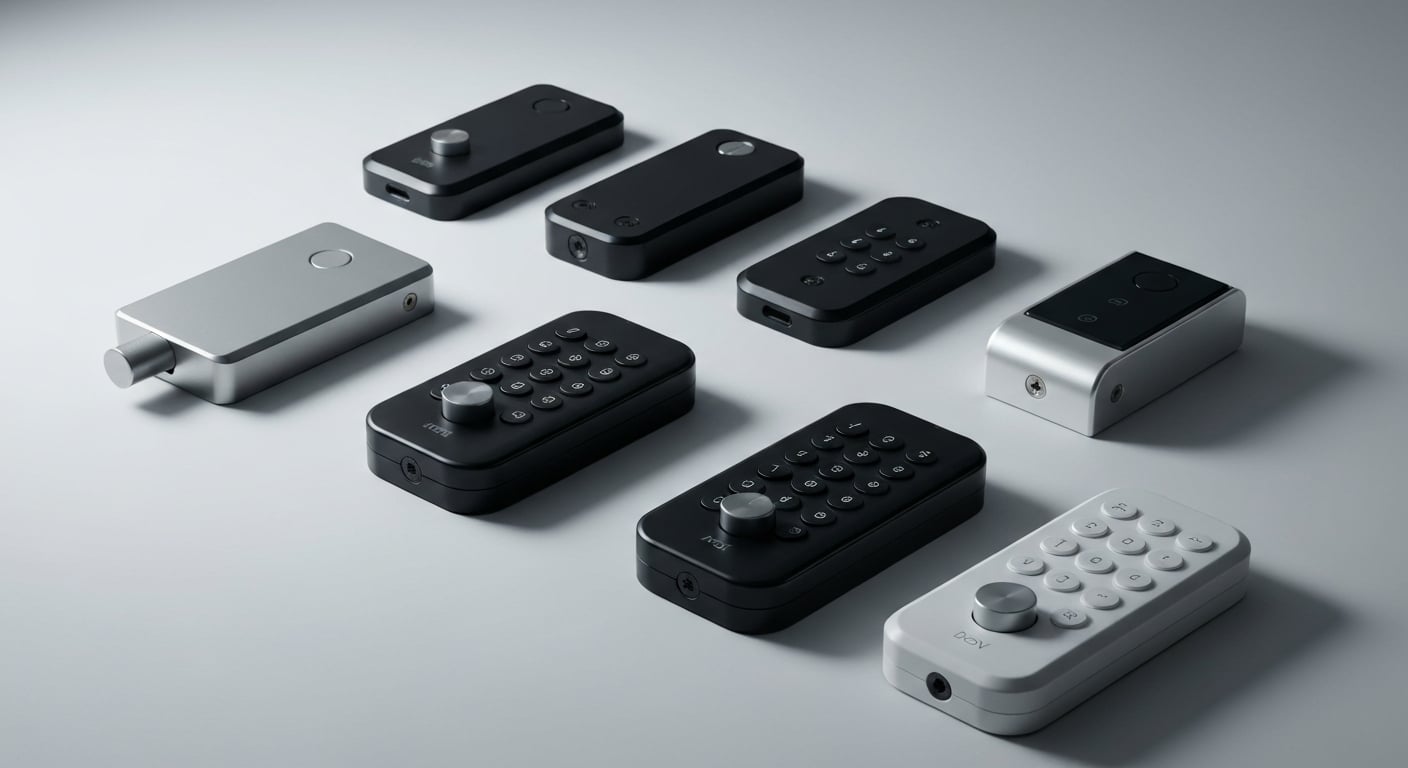
Quick answer: For most Arlington homes, the best 2026 smart lock comes down to your ecosystem and door. Yale Assure 2 and Schlage Encode Plus lead for built-in Wi-Fi and (on Plus models) Apple Home Key tap-to-unlock; August Wi-Fi is the easiest retrofit because it keeps your existing deadbolt and key; Level Lock Plus hides the entire mechanism inside the bolt for homes that want no visible smart hardware. All four fit a standard 2-3/8-inch backset on a typical door. The deciding factors are Wi-Fi vs hub-based connectivity, battery life, and how the lock handles Matter, the cross-platform standard from the Connectivity Standards Alliance.
Wi-Fi vs Z-Wave vs Zigbee vs Matter — what actually matters
The connectivity choice decides how your lock talks to your phone and your home, and it is the single most confusing part of the purchase. Built-in Wi-Fi means the lock connects straight to your router with no extra equipment — convenient, but harder on batteries because Wi-Fi radios draw more power. Z-Wave and Zigbee are low-power mesh protocols that need a separate hub (a SmartThings, Ring, or similar bridge) but extend battery life and integrate cleanly into a larger smart-home setup.
Matter is the standard worth understanding before you buy. Governed by the Connectivity Standards Alliance and backed by hundreds of member companies including Apple, Google, and Amazon, Matter is the interoperability layer that lets a single lock work across Apple Home, Google Home, and Alexa without being locked to one brand. A Matter-over-Thread lock combines low-power mesh networking with cross-platform control — the most future-proof combination in 2026.
For a typical Arlington home, the practical guidance is simple. If you already run Apple Home, Google Home, or Alexa and want one app, prioritize a lock with native support for that platform or Matter. If you have no smart-home hub and want the simplest setup, built-in Wi-Fi is fine — just expect to change batteries more often. If you are building out a broader system, a hub-based Z-Wave or Thread lock pays off in battery life and reliability.
The four locks, head to head
Each of these is a legitimate choice for an Arlington home; the right one depends on your door and your phone. Below is what separates them in real installs.
Yale Assure 2
The Assure 2 line is modular: you choose a keypad style (touchscreen, push-button, or key-free) and a connectivity module (Wi-Fi, Z-Wave, or Matter-over-Thread). That flexibility makes it the easiest to match to an existing ecosystem. The key-free version removes the physical keyway entirely, which appeals to homeowners who want a clean look — though it means a dead battery requires the emergency 9V terminal or app access. It fits standard backsets and is graded to ANSI/BHMA security levels.
Schlage Encode Plus
The Encode Plus pairs built-in Wi-Fi with Apple Home Key, so you can tap an iPhone or Apple Watch to unlock — the smoothest daily-use experience for Apple households. Schlage deadbolts consistently carry strong ANSI/BHMA grades, which matters because a smart lock is still a physical deadbolt first. The trade-off is that built-in Wi-Fi plus the Home Key radio is harder on batteries than a hub-based lock.
August Wi-Fi
August is the retrofit answer. It mounts on the interior side of your existing deadbolt, so the exterior hardware and your physical key stay exactly as they are — ideal for renters and for anyone who does not want to change the look of their door. Installation is the fastest of the four because you are not removing the lock body. The limitation is that it depends on the quality of the deadbolt it sits on; a worn or misaligned existing deadbolt should be serviced first.
Level Lock Plus
Level hides the entire smart mechanism inside the bolt assembly, so from the outside the door looks like it has an ordinary deadbolt. Level Lock Plus supports Apple Home Key and a card/fob tap. It is the choice for homeowners who want smart-lock function with zero visible smart hardware. The hidden design means tighter tolerances at install, so door alignment matters more than with a bulkier lock.
Will it fit your door? Backset, thickness, and bore
Most smart-lock returns come down to fit, not features. Three measurements decide compatibility. Backset is the distance from the door edge to the center of the bore hole, and it is almost always 2-3/8 inches or 2-3/4 inches on residential doors — every lock covered here adjusts to both. Door thickness on standard exterior doors is typically 1-3/8 to 1-3/4 inches, within range for all four. Bore diameter is normally a standard 2-1/8-inch hole.
Arlington's housing stock works in your favor. With roughly 175,000 housing units, much of it built from the 1980s onward, the overwhelming majority of homes here use standard bore-and-backset hardware that accepts any major smart deadbolt. The exceptions are older doors, custom or fire-rated doors, and some metal storm or security doors, where a measurement check before purchase saves a return.
If you are unsure, a quick measurement of backset, thickness, and bore — or a photo of the existing deadbolt from both sides — lets an installer confirm fit before the lock is even ordered. That five-minute step is the difference between a clean swap and a second trip.
Security and the things people skip
A smart lock is a deadbolt first and a computer second. The physical grade still matters: look for ANSI/BHMA Grade 1 or Grade 2, because no app feature compensates for a bolt that can be forced. The Builders Hardware Manufacturers Association grading applies to smart deadbolts exactly as it does to mechanical ones.
The computer half matters too. The National Institute of Standards and Technology publishes IoT device cybersecurity guidance (the NISTIR 8259 series) describing baseline capabilities a connected device should have — secure software updates, proper access control, and data protection. In practice that means buying from a manufacturer that ships firmware updates, using a unique strong password and two-factor authentication on the lock's app account, and removing old user codes when a houseguest or contractor no longer needs access.
One install detail outlasts every feature: a reinforced strike plate with three-inch screws into the door frame. The Federal Trade Commission and home-security guidance consistently note that most forced entries defeat the frame, not the lock. A smart deadbolt on a weak strike is still a weak door — fixing the strike at install is the cheapest security upgrade you can make.
Smart lock comparison for Arlington homes (2026)
| Lock | Connectivity | Best for | Keeps existing deadbolt? |
|---|---|---|---|
| Yale Assure 2 | Wi-Fi / Z-Wave / Matter (modular) | Matching an existing ecosystem | No (full replacement) |
| Schlage Encode Plus | Wi-Fi + Apple Home Key | Apple households, tap-to-unlock | No (full replacement) |
| August Wi-Fi | Wi-Fi (interior retrofit) | Renters, fastest install | Yes (mounts on existing) |
| Level Lock Plus | Apple Home Key + tap card | Hidden, no visible smart hardware | No (replaces internals) |
"People shop smart locks on app features and forget the door. Ninety percent of the install questions I get answered with a tape measure: backset, door thickness, and bore size. Pick the lock that fits your door and your phone's ecosystem first, then worry about whether it has a fingerprint reader. A lock that fights your door is a lock you will rip out in six months."
— Licensed mobile locksmith, smart-lock installation specialist, 9 years in the DFW market (anonymized)
Sourced stats
- Matter, the smart-home standard governed by the Connectivity Standards Alliance, is backed by hundreds of member companies and is the interoperability layer that lets one lock work with Apple Home, Google Home, and Amazon Alexa. — Connectivity Standards Alliance (2024)
- NIST IoT cybersecurity guidance (NISTIR 8259 series) defines baseline capabilities — secure update, access control, and data protection — that a connected lock should meet. — National Institute of Standards and Technology (2022)
- Arlington has roughly 175,000 housing units, a large share built since the 1980s with standard 2-3/8-inch or 2-3/4-inch deadbolt backsets that fit every major retrofit smart lock. — U.S. Census Bureau (2024)
- ANSI/BHMA A156 grading applies to smart locks too, so a Grade 1 or Grade 2 smart deadbolt meets the same physical-security bar as a comparable mechanical one. — Builders Hardware Manufacturers Association (2024)
Related services
Frequently asked questions
What is the best smart lock for an Arlington home in 2026?
It depends on your door and phone ecosystem. Yale Assure 2 and Schlage Encode Plus lead for built-in Wi-Fi (Encode Plus adds Apple Home Key tap-to-unlock); August Wi-Fi is the easiest retrofit because it keeps your existing deadbolt and key; Level Lock Plus hides all smart hardware inside the bolt. All four fit standard residential doors.
Do I need a hub for a smart lock?
Not always. Locks with built-in Wi-Fi connect straight to your router with no hub. Z-Wave, Zigbee, and Thread locks need a hub but get better battery life. If you want one app across Apple, Google, and Alexa, choose a Matter-capable lock, since Matter (from the Connectivity Standards Alliance) is the cross-platform standard.
Will a smart lock fit my existing door?
Almost certainly. Standard residential doors use a 2-3/8 or 2-3/4-inch backset, 1-3/8 to 1-3/4-inch thickness, and a 2-1/8-inch bore — all within range for every major smart lock. Older, custom, fire-rated, or metal doors should be measured first. Most Arlington homes use standard hardware that accepts any major smart deadbolt.
Are smart locks secure?
A good one is, on both fronts. Physically, choose ANSI/BHMA Grade 1 or Grade 2 — the BHMA grade matters more than any app feature. Digitally, follow NIST IoT guidance: buy a brand that ships firmware updates, use a strong unique password with two-factor authentication, and remove old access codes. Also reinforce the strike plate, since most forced entries defeat the frame, not the lock.
How long do smart-lock batteries last?
It varies by connectivity. Built-in Wi-Fi locks draw more power and may need new batteries every few months; hub-based Z-Wave, Zigbee, or Thread locks typically last much longer between changes. If battery life is a priority, a hub-based or Matter-over-Thread lock is the better choice.
Sources cited
- Connectivity Standards Alliance — Matter smart-home connectivity standard specification (2024)
- Builders Hardware Manufacturers Association — ANSI/BHMA A156 product certification standards (2024)
- National Institute of Standards and Technology — NISTIR 8259 / IoT device cybersecurity capability guidance (2022)
- U.S. Census Bureau — QuickFacts: Arlington city, Texas (population, housing, owner-occupancy) (2024)
- U.S. Federal Trade Commission — Consumer Advice — Consumer guidance on hiring a locksmith and avoiding lockout scams (2023)
- Associated Locksmiths of America (ALOA) — Locksmith professional standards and consumer guidance (2024)
- UL Solutions — UL 437 (key locks) and UL 10C (fire door assemblies) certification standards (2024)