Car Immobilizer Programming & All-Keys-Lost in Arlington
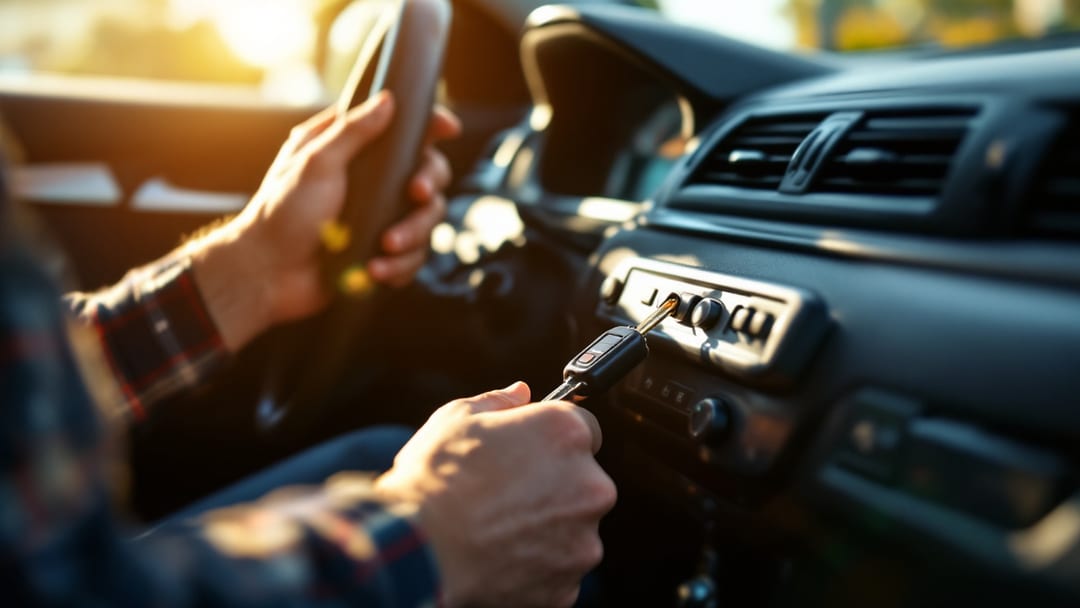
If every key to your car is gone and the engine cranks but will not start, you are dealing with the immobilizer — and it is a fixable problem. As of July 2026, Arlington Locksmith handles car immobilizer programming and all-keys-lost jobs across Arlington and the Hwy 360 corridor as a mobile service, meaning we come to the car. Most all-keys-lost jobs on domestic and Asian vehicles run about $250 to $450, and push-to-start proximity systems commonly land between $400 and $600 or more, with final pricing confirmed before any work begins. If you are stranded right now, call or text (817) 646-7207 and we will talk through your make, model, and key situation.
This guide explains what an immobilizer actually is, how transponders and key data stored in the car's computer work, the difference between OBD and bench programming, and exactly what an all-keys-lost workflow looks like — including the parts most drivers never hear about.
What is a car immobilizer and why won't my car start?
An immobilizer is an electronic anti-theft system built into nearly every vehicle sold since the late 1990s. When you insert or bring a key near the ignition, a small antenna ring sends out a radio signal. A tiny chip called a transponder, hidden inside the key head or fob, answers back with a coded reply. If the reply matches what the car expects, the immobilizer tells the engine control module (ECM) to allow fuel and spark. If the reply is wrong or missing, the engine may crank but it will never actually run.
That is the telltale sign of an immobilizer fault or a key the car does not recognize: strong cranking, no start, and often a flashing security or key icon on the dash. It is very different from a dead battery or a bad starter, and it is why cutting a plain metal key that fits the door will still leave you stranded.
The National Highway Traffic Safety Administration has long credited electronic immobilizers with major reductions in vehicle theft, which is exactly why they are hard to bypass. That security is good news for owners and the reason professional programming exists in the first place. If you need a fresh transponder cut and coded, our transponder key service covers it.
How does the car store key data — BCM, ECU, and EEPROM?
Here is the part most people never hear: your keys are not "smart" on their own. The permission to start your car lives inside the vehicle's electronics. Depending on the platform, the immobilizer data is stored in the body control module (BCM), a dedicated immobilizer box, the ECU, or a combination of these. Inside those modules sits a memory chip — often an EEPROM — that holds the list of key codes the car will accept and the secret security data that guards them.
Programming a new key is really the act of getting one of those modules to add your new transponder's identity to its approved list. That is why a locksmith is not "copying" a key in the traditional sense during all-keys-lost work — we are writing new trust into the car's brain. Understanding where that data lives on a given platform is what separates a quick driveway job from one that needs deeper access.
- Ford and Lincoln use PATS (Passive Anti-Theft System), storing key data in the PCM or a dedicated module and usually requiring a security PIN.
- GM has used Passlock and VATS on older cars and rolling-code systems on newer ones, with data in the BCM.
- Chrysler, Dodge, Jeep, and Ram use Sentry Key / SKIM or the WIN module, which holds a PIN.
- Toyota and Lexus use smart key and immobilizer systems that can lock down hard on all-keys-lost.
- Nissan Intelligent Key and Honda's immobilizer round out the common domestic-and-Asian landscape.
What's the difference between OBD and bench (module) programming?
There are two broad ways to get a new key into that module, and the right one depends on the vehicle.
OBD programming is done through the OBD-II diagnostic port, usually under the dashboard on the driver's side. A locksmith plugs in a diagnostic programmer, the tool talks to the immobilizer over the car's data network, and — with the correct security PIN — writes the new key. This is fast, non-invasive, and the norm for a huge share of Arlington vehicles. It is what makes true mobile service possible in a parking lot at The Parks Mall or a driveway near Lake Arlington.
Bench (module) programming is the deeper route. When a car's security will not allow key data to be added over the OBD port — common on some later-model platforms — the locksmith removes the relevant module (BCM, immobilizer box, or instrument cluster), opens it, and reads or writes the EEPROM directly with specialized equipment. It is more labor, requires more skill, and is exactly the kind of honest complexity that changes the price.
| Method | How it works | Typical use | Relative cost |
|---|---|---|---|
| OBD programming | Through the diagnostic port with a PIN | Most domestic & Asian all-keys-lost | Lower |
| Bench / EEPROM | Module removed, chip read/written directly | Locked-down or damaged modules | Higher |
| Dealer-only | Factory tools + online security | Very late-model European | Highest / quote |
For a full computer-side job, our car computer programming service and all-keys-lost service cover both approaches.
What is the all-keys-lost workflow, step by step?
All-keys-lost (AKL) is its own discipline because there is no working key to drop the car into an easy programming mode. Here is the real workflow a professional follows:
- Verify ownership. Before anything else, we confirm you own the vehicle — photo ID plus a title or registration matching the VIN.
- Decode the VIN and originate a key. The VIN and lock reading let us cut a mechanical blade that turns the ignition or opens the door, even if the car will not start yet.
- Access the immobilizer. We connect an OBD programmer or, when needed, access the module directly.
- Pull or bypass the security PIN. Many systems demand a PIN or an incode/outcode pair before they accept a new key.
- Program the transponder or smart key. The new key's identity is written into the module and married to the car.
- Erase and test. On AKL jobs it is smart to wipe old lost keys from memory so they cannot start the car, then test every function.
The National Automotive Service Task Force maintains the Secure Data Service that lets vetted, registered locksmiths obtain factory security codes and PINs through legitimate channels — a big reason a qualified locksmith can handle jobs that used to be dealer-only.
Why do some cars need a PIN, incode, or outcode?
Manufacturers added a second lock on top of the transponder: a secret code the tool must present before the module will even discuss adding a key. On Ford PATS you may need the incoming/outgoing security seed exchange; on Chrysler SKIM/WIN and many others there is a fixed PIN.
A skilled locksmith gets that code one of three ways: reading it directly from the module, calculating it with the tool, or requesting it through NASTF's Secure Data Service by proving they are a registered, background-checked professional. This is also why fly-by-night operators struggle with modern cars — no legitimate access to the security data.
According to the Federal Trade Commission, consumers should always confirm that a service provider is properly licensed and insured before authorizing work — verify credentials and get the price in writing before anyone starts.
You can also verify a company's standing through the Texas Department of Public Safety, which oversees the private-security industry in the state, at dps.texas.gov. Arlington Locksmith is licensed and insured, and we are glad to confirm that before we touch your vehicle.
When is the dealer genuinely the better call?
Honesty matters here. For most Arlington drivers in a Ford, Chevy, Toyota, Honda, Nissan, Dodge, or Jeep, a mobile locksmith is faster and cheaper than towing to a dealership. But there are real exceptions.
Some very late-model European vehicles — certain BMW, Mercedes-Benz, Audi, and Porsche models, and a few of the newest Lexus platforms — use online, server-side security that only factory tools can satisfy on all-keys-lost. In those cases, the dealer is the right route, and we will tell you that up front rather than waste your time and money. Knowing where that line falls is part of doing this work properly.
Say a driver loses both keys near AT&T Stadium — what happens?
Say a driver parks in the Entertainment District for an event at AT&T Stadium or Globe Life Field, and by the time they walk back, both keys to their 2018 push-to-start SUV are simply gone — dropped somewhere in a crowd of thousands. The car is a proximity (keyless) vehicle, so this is a full all-keys-lost, smart-key job.
We would come to the lot, verify ownership against the VIN, and read the vehicle to originate an emergency blade for the mechanical override. Then we connect to the immobilizer, retrieve or bypass the security data, and program a fresh proximity fob so the car detects it and the push-button start works. Because it is proximity and AKL, expect this to sit in the $400 to $600-plus range rather than the lower domestic tier — proximity systems and their fobs simply cost more. Before any of that, the driver gets a firm quote. If they only need a replacement smart fob rather than full AKL, our key fob programming service is the lighter path.
How much does immobilizer and all-keys-lost work cost in Arlington?
Pricing depends on year, make, model, key type, and whether it is a spare-key add or a true all-keys-lost job. These are realistic 2026 DFW ranges, and the exact figure is always confirmed before work:
| Job type | Typical 2026 DFW range |
|---|---|
| Transponder / chip key (cut + programmed) | $120 – $250 |
| Remote-head / flip key | $150 – $400 |
| Push-to-start smart fob (fob + programming) | $200 – $650 |
| Programming labor only (you supply the fob) | $60 – $150 |
| All-keys-lost (domestic / Asian) | $250 – $450 |
| All-keys-lost (proximity / push-to-start) | $400 – $600+ |
| European / luxury AKL | Often quote-required |
A single spare programmed while you still have a working key is the cheapest scenario — worth doing before you ever get stranded. For that, see our spare keys & duplication and car key replacement services. If your problem is the ignition cylinder itself rather than the electronics, that is our ignition repair service, and a straightforward car lockout is separate again.
We cover Downtown Arlington, the UTA area, south Arlington, the entertainment district, Viridian, and out along the I-20, I-30, and Hwy 360 corridors, plus Pantego, Dalworthington Gardens, and nearby Grand Prairie and Kennedale.
Frequently Asked Questions
What does "all keys lost" mean for programming a car?
All keys lost means there is no working key left to place the vehicle in programming mode the easy way. A locksmith must verify ownership, read or bypass the immobilizer, and often pull a PIN or security code before a new transponder or smart key can be generated and married to the car computer.
Can a locksmith program my car immobilizer on-site in Arlington?
Yes, in most cases. Arlington Locksmith carries mobile diagnostic programmers that talk to the immobilizer through the OBD-II port right in your driveway or a parking lot. Some late-model European systems need bench work or the dealer, and we will tell you honestly before any work begins.
How much does all-keys-lost programming cost in Arlington?
For most domestic and Asian vehicles, all-keys-lost runs about $250 to $450, while push-to-start proximity systems commonly land between $400 and $600 or more. European and luxury cars are often quote-required. Final price depends on year, make, model, and key type, always confirmed before work.
What is a transponder and how does the immobilizer use it?
A transponder is a small chip inside the key head that answers a radio challenge from the ignition antenna. If the chip returns the correct code, the immobilizer lets the engine control module fuel and start the car. A wrong or missing chip means the engine cranks but will not run.
Why do some cars need a PIN or incode/outcode to program a key?
Many immobilizer systems, including Ford PATS and Chrysler SKIM, require a security PIN before a new key is accepted. A locksmith reads that PIN from the module or requests an incode/outcode pair through a secure locksmith channel so the car computer will trust the newly cut key.
Do I need proof of ownership for immobilizer or all-keys-lost work?
Yes. A reputable locksmith will ask for a photo ID and proof you own the vehicle, such as the title or current registration matching the VIN. This protects you and follows industry security standards, since programming a key effectively creates full access to the car.
Related reading and next steps
If your car is a specific model, our deep-dives help too: see Dodge Charger key fob replacement in Arlington and, if you are locked out around town, car lockout help at Arlington venues. For a broader cost overview, read how much car key replacement costs in Arlington.
Immobilizer trouble and all-keys-lost jobs are stressful, but they are routine for a properly equipped mobile locksmith — and you rarely need a tow. Call or text (817) 646-7207 for a straight quote on your year, make, and model. Reach us anytime at tel:+18176467207 or through our contact page — call or text for a quote before any work begins.